

Why Authenticity Outperforms Perfection
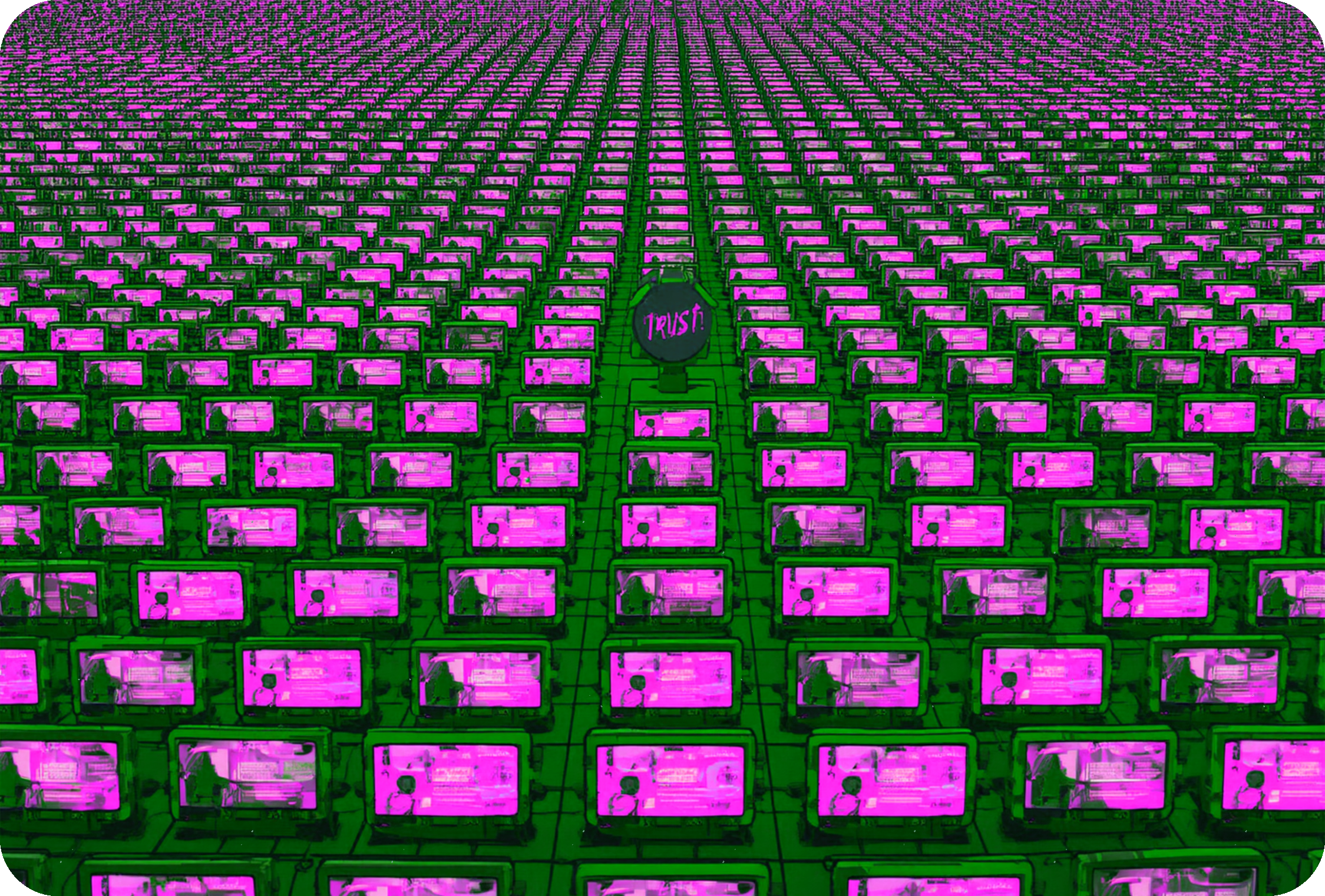
In our previous blog, we dove into why audiences react negatively to certain forms of AI advertising. The conclusion wasn't that people hate AI SLOP. It was that people react differently depending on the context of that SLOP. When authenticity is part of the product, audiences become much more sensitive to anything that feels artificial. Why do audiences trust imperfect humans more than perfect marketing?
People are becoming skeptical of content that feels gratuitously overengineered. Advertising has spent decades chasing a version of perfection that probably never existed in the first place. Better cameras. Better editing software. Better targeting. Better analytics. Better production quality. Every few years the tools improve, the workflows get faster, and the gap between what a small business can produce versus a major corporation gets a little smaller. All while this is happening in real time.
For the longest time, that seemed like the obvious goal.
Make everything cleaner. Sharper. More polished. More professional.
Then something strange happened.
The more polished advertising became, the less people seemed to trust it. Not because the work itself got worse. In many cases it got objectively better. The photography improved. The graphics improved. The production value improved. The problem is that audiences improved too. People became fluent in the language of advertising. They learned the syntax. They learned the tricks. They learned what a sales pitch looks like even when it pretends not to be one.
We talked about disconnect in the previous article. Disconnect is when all the pieces are technically there, but something important is still missing. Advertising has its own version of that problem. The visuals are perfect. The messaging is polished. The branding is consistent. Every box gets checked. Yet something still feels off. When that feeling becomes the common normality, audiences start turning the content itself into a joke. The advertisement becomes a MEME. The formula becomes recognizable. The audience sees the script before the script finishes speaking. The source keeps following the playbook while everyone else has already moved on.
That is a different kind of disconnect.
The problem isn’t that advertising became too polished. The problem is that audiences became increasingly skilled at recognizing when something was designed to manipulate us when something feels authentic on the surface instead of actually being authentic. Once people learn the language, they start noticing when someone is phoning it in, reading from a script and being inauthentic.
Once people learn the language, they also learn how to recognize the difference between something that feels lived in and something that feels manufactured.
As humans, we like to think we're searching for perfection. Better products. Better experiences. Better outcomes. Yet when something feels too polished, too rehearsed, or too carefully engineered, a different part of the brain starts asking questions. Not because the quality is bad, but because it no longer feels natural. The presentation becomes the thing we're paying attention to instead of the message itself. Our monkey-brains are constantly looking for signals. Signs that something is real. Signs that effort was involved. Signs that another human being actually exists somewhere behind the content. We notice personality. We notice mistakes. We notice quirks. We notice lived experience. Those details matter because they act as evidence. Not evidence that something is perfect, but evidence that something is genuine.
This is why authenticity often outperforms polish.
People trust perfection when perfection is the promise.
People trust authenticity when authenticity is the promise.
A shaky phone video can outperform a professionally produced commercial. Not because the video is objectively better. It usually isn't. The lighting may be worse. The audio may be worse. The production quality may be worse. But the audience interprets it differently. The imperfections become trust signals. They suggest that what you're seeing is closer to reality and further away from a performance designed to imitate reality.
People don't necessarily trust perfection.
They trust authenticity.
They trust the signals that authenticity leaves behind. In a world increasingly filled with over polished content, carefully curated brands, and algorithmically optimized messaging, those signals become more valuable, not less. The more mass manufactured everything starts to feel, the more people look for evidence that another human being is still somewhere in the process.
The more reality gets curated, the more valuable uncurated reality becomes.
In order for signals of authenticity to matter, there must be a delivery system for those signals. This is where User Generated Content, or UGC, comes into play. UGC is what happens when the customer becomes the advertisement. That sounds overly simplistic, but it is surprisingly accurate.
Traditionally, advertising works by a company telling you why you should trust them and spend your money with them. They built the product. They wrote the script. They paid for the ad. They control the message from beginning to end. UGC flips that relationship upside down. Instead of the company speaking, the customer speaks. Instead of a sales pitch, you get the customer’s experience. Instead of being told what to think, you are shown what happened.
A review. A testimonial. A customer photo. A product demonstration recorded on a cell phone. A story about how someone solved a problem using a product or service. All of these are forms of UGC. The company may benefit from them, but they did not create the experience itself. They are borrowing credibility instead of manufacturing it.
The difference is discovery versus delivery.
Traditional advertising is delivery.
A company creates a message and delivers it directly to you. Here is our product. Here is why it is amazing. Here is why you should trust us. UGC works differently. It feels less like someone is handing you a conclusion and more like you are discovering the conclusion for yourself. Instead of being told what to think, you are watching someone else's experience unfold in real time. Here’s what happened. Here’s what I bought. Here’s what worked. Here’s what didn’t.
We don't need a study to tell us this happens. We do it ourselves every day. How often do you read the advertisement for a product versus immediately scrolling down to the reviews? The company says the product is amazing. Of course it does. The company wrote the advertisement. What people want to know is what happened after somebody bought it.
The advertisement tells you what the company wants you to believe. The reviews tell you what happened after somebody spent their money. One is delivery. The other is discovery.
That does not mean reviews are always correct. People can be wrong. They can exaggerate. They can leave out context. But people understand something important is happening. The customer has no obligation to protect the brand. They are not reading from the company’s script. They are describing an experience. That experience may be positive, negative, or somewhere in between, but it feels closer to reality.
Various studies have found that roughly 80–90% of consumers trust user-generated content more than traditional advertising. That statistic is interesting, but it shouldn't be surprising. People trust UGC for the same reason they trust imperfect content. The imperfections act as evidence that another human being was involved somewhere in the process. People learned the language of advertising. They learned the tricks. They learned what a sales pitch looks like even when it pretends not to be one. They know what to skip and avoid. What they are looking for now are signals that another human being exists behind the message. UGC works because those signals are built directly into the format itself. People trust experiences more than they trust claims.
Big companies often spend enormous amounts of money trying to simulate the exact thing small businesses naturally produce every day.
This is where things start getting a little unfair.
Large companies spend millions of dollars trying to create the appearance of authenticity. Entire marketing teams are built around customer personas, brand voice guidelines, emotional storytelling, and carefully curated content strategies. None of those things are inherently wrong. The problem is that authenticity becomes much harder to manufacture once people learn what manufactured authenticity looks like.
Small businesses naturally have an advantage but it’s entirely different. They do not have to create authenticity from scratch because they are already surrounded by it. The owner has a story. The employees have stories. The customers have stories. The day-to-day operation of the business creates content naturally because real people are interacting with real problems in real time. A local contractor can show a project in progress. A restaurant can show what happens in the kitchen. A realtor can share a customer's success story. A small business does not need to invent evidence. The evidence is already there.
Small businesses assume they need a commercial, a production crew, even a website or a massive advertising budget to compete. In reality, what many people are looking for is something much simpler. They want evidence that there are actual human beings behind the business. They want to know who they are working with. They want to see the process. They want to see the people.
You do not necessarily need a perfect advertisement.
You need evidence that “you” are real.
That is becoming increasingly valuable in a world where polished content, automated messaging, and manufactured engagement are becoming easier to produce than ever before. The more artificial the environment becomes, the more valuable genuine human interaction becomes.
At this point, it would be easy to misunderstand the argument.
People hear words like authenticity, UGC, behind-the-scenes content, and customer stories and immediately assume the lesson is to stop trying. Grab a phone. Record something random. Post it. Authenticity achieved. Not quite.
Authenticity is not the same thing as low effort.
Authenticity without intention is just noise-slop.
A shaky camera does not automatically make content trustworthy. Bad lighting is not a marketing strategy. An unfinished thought does not become valuable simply because it was unscripted. People are not rewarding businesses for being careless. Real authenticity still requires effort. The difference is where that effort gets applied. Instead of spending all of your energy trying to manufacture a perfect image, you spend that energy communicating something genuine. You choose the right story. You highlight a real customer experience. You show part of the process. You explain why something matters. The content may feel more natural, but that does not mean it was accidental.
Good authentic content is often considered more seriously.
The audience may not notice the editing. They may not notice the framing. They may not notice the planning. What they notice is that the final result feels believable. The craft is still there. It is simply being used in service of honesty rather than performance. The goal is not to look less professional. The goal is not to look less competent. The goal is to create something so aligned with who you are and what your business actually does, that no amount of polish can make it feel fake.
Authentic does not mean lazy.
Authentic does not mean low quality.
Authentic means genuine.
It always did…
At this point, it would be easy to turn this into an argument about advertising, technology, algorithms, AI, social media, or any of the other things people love blaming for modern communication problems.
That would be missing the point.
Advertising is not going away.
Neither are social media platforms. Neither are algorithms. Neither is AI. Especially not AI. Every year the tools become faster, cheaper, more capable. Every year the minimum for entry gets lower. Every year more content is created than the year before. That trend is unlikely to reverse itself. The reality check is that most of these tools are not inherently good or bad. They are amplifiers. They make it easier to produce content. They make it easier to distribute content. They make it easier to reach people. 30 years ago, that used to be a much more complicated process. What they cannot do is automatically create trust.
Trust still has to be earned.
That is what this entire conversation has really been about.
People learned the language of advertising. They learned the patterns. They learned the tricks. They learned how to recognize when something feels disconnected from reality. Once that happens, no amount of production quality, targeting, optimization, or technology can fully compensate for it. The irony is that many businesses spend enormous amounts of time trying to appear bigger, more polished, and more professional while audiences are increasingly searching for evidence that there are actual human beings behind the message. Not perfection. Not performance. Not manufactured relatability. Just people.
That does not mean audiences want low effort content. It does not mean professionalism is dead. It does not mean every shaky phone video deserves attention. It simply means that authenticity has become increasingly valuable because artificiality has become increasingly common. The more curated the environment becomes, the more people look for something that feels lived in. The more automated communication becomes, the more people value human communication.
The more content becomes optimized, the more people notice what feels genuine.
That is the real lesson worth learning.
The future does not belong to the businesses with the biggest budgets, the most sophisticated tools, or the most polished advertisements. Those things still matter. They always will. But increasingly, the businesses that stand out may simply be the ones that remain recognizable as human in an environment that often feels anything but.
The Human Signal
Why Authenticity Outperforms Perfection
by David-Angelo Mineo
2,235 Words
